Translate a PDF into French — every field, table and checkbox still where it was.
- Script
- Latin
- Bundled font file
- NotoSans-Regular.ttf
- Language tag
- fr
A real document, before and after
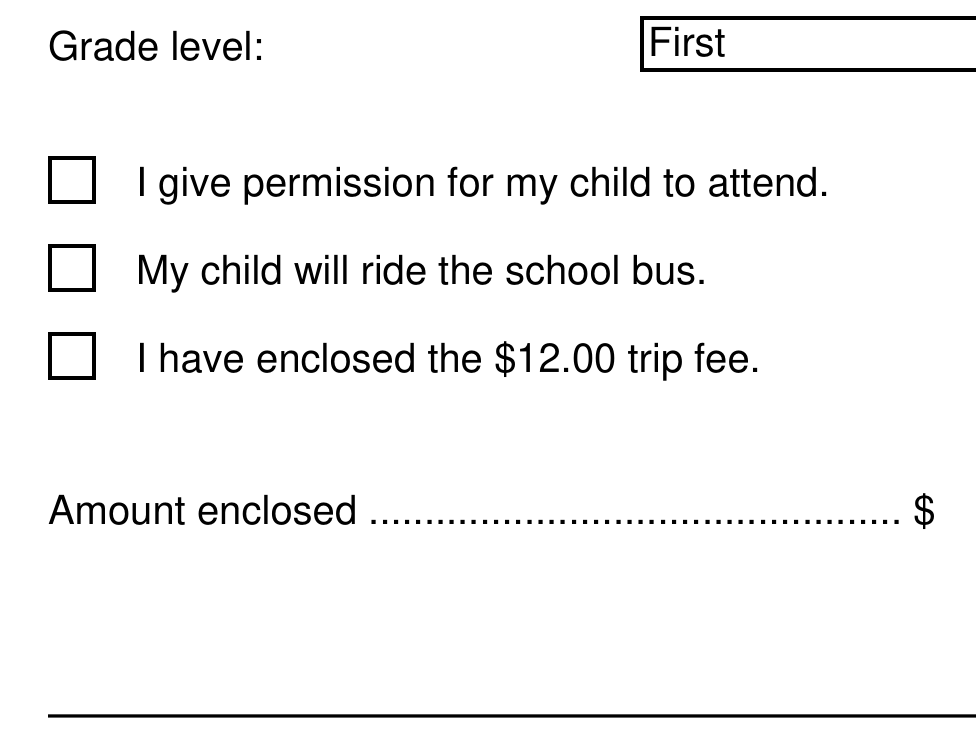
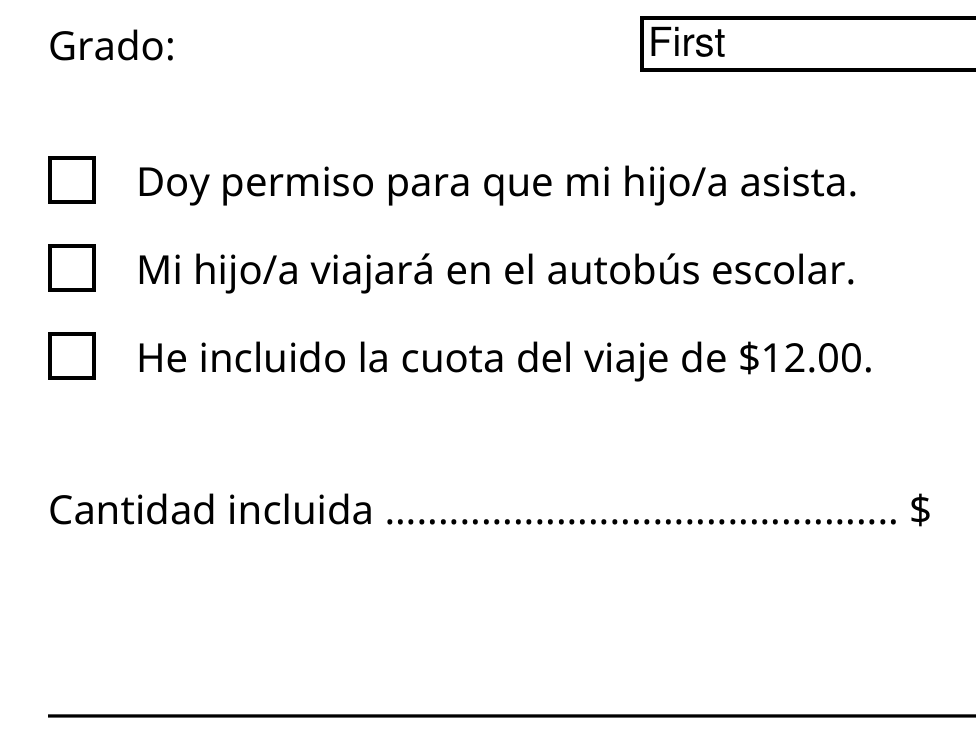
A public-domain form put through this engine. This sample was translated into Spanish; the rules on this page are the same for any language we draw.
Produced by this engine on September 13, 2026 from a public-domain form. No part of this image was edited by hand.
This is a working copy to help you understand the document — not a certified translation.
What changes when you translate into French
Every block, every color and every margin is kept — each block goes back in its own place, and nothing around it moves.
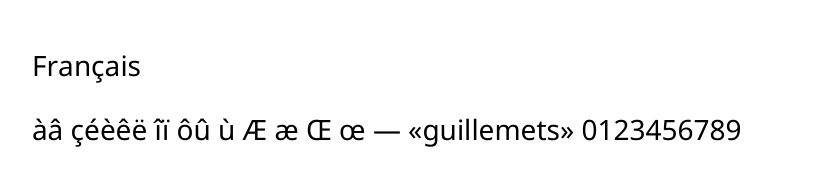
- French draws from the bundled Latin faces, and the probe behind this page is built from a wide accent set — grave and circumflex accents over the letter a, a cedilla and a circumflex-and-diaeresis pair over the letter e, a circumflex over the letter i, a circumflex over the letter u, plus the a-e and o-e ligatures in both cases. Every one of those is a single codepoint that measures clean against the committed face. A diaeresis over the second of two adjacent vowels signals they are pronounced separately rather than blended, and the engine draws it as its own mark rather than a stray dot.
- An italicized French phrase or a bolded heading keeps that weight and slant: the engine resolves a separate face file per style combination from the source run's own flags, so emphasis is never lost on re-insertion. A word for castle, carrying a circumflex over its a, keeps that circumflex whether the source run marked it plain, bold, italic, or both.
- French is a spaced script for wrapping purposes, so a line only breaks at whitespace — the a-e and o-e ligatures, seen in a borrowed word for a body of creative work or the everyday word for heart, are single codepoints rather than two letters glued together, so a break can never fall inside one of them the way it could if they were drawn as separate letters. Translated French text typically runs longer than its English source: French routinely spells out with a separate article and preposition what English folds into one bare noun or a single possessive ending, so a French sentence usually carries more words than the English it came from. The same ladder every language on this site uses still applies when that growth pushes a line past its box: wrap at the next space, step the type down but never past 75% of its original size, grow the block into any empty space below it, then harmonise the type size across every unit on the page that shares a source style, so no block sits at an odd size beside its neighbours; a line that still will not fit keeps its original wording in place and the page is flagged.
- Not yet. Scanned pages have no text layer, so there's nothing on them to translate. Remove them before you get a price; the translated PDF contains the pages you kept. If every page looks scanned, there's nothing to translate and nothing to pay. OCR is on the roadmap.
- A French character the bundled face cannot draw is replaced with a placeholder glyph, and the engine records that block as glyph_unsupported in the report — it never guesses an unaccented substitute or drops the character outright.
Any language we translate into. The bundled fonts draw Latin, Cyrillic, Han (Simplified) and Japanese (kanji, hiragana and katakana). Scripts we do not yet carry a font for — Arabic, Hebrew and others — are replaced with a placeholder and the block is flagged in the report, never silently dropped.