Translate a PDF into Portuguese — every field, table and checkbox still where it was.
- Script
- Latin
- Bundled font file
- NotoSans-Regular.ttf
- Language tag
- pt
A real document, before and after
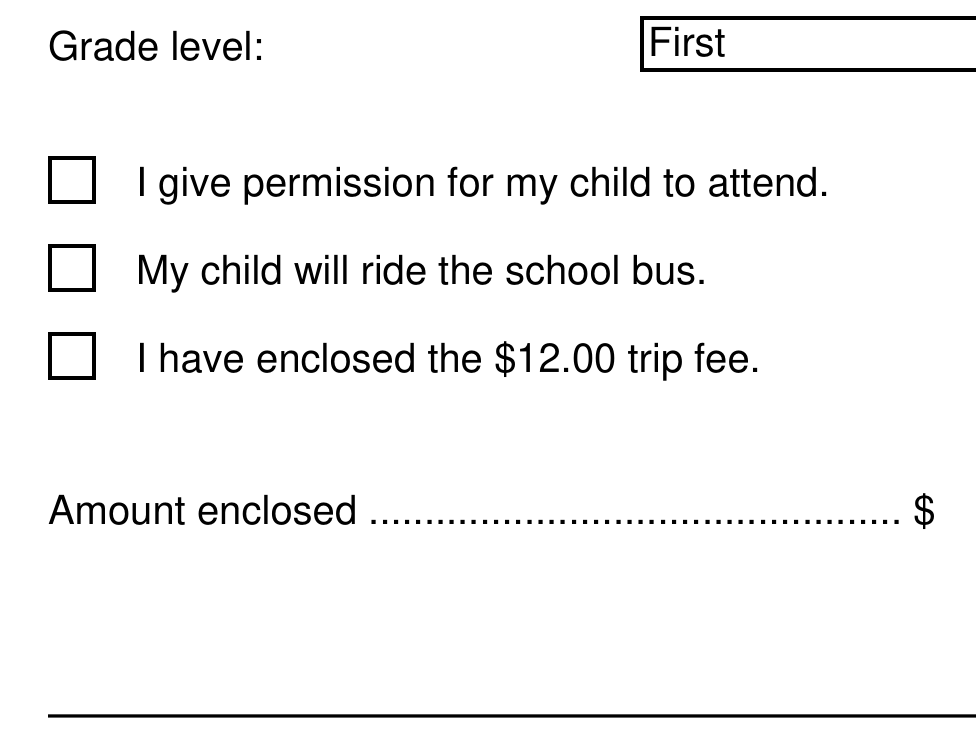
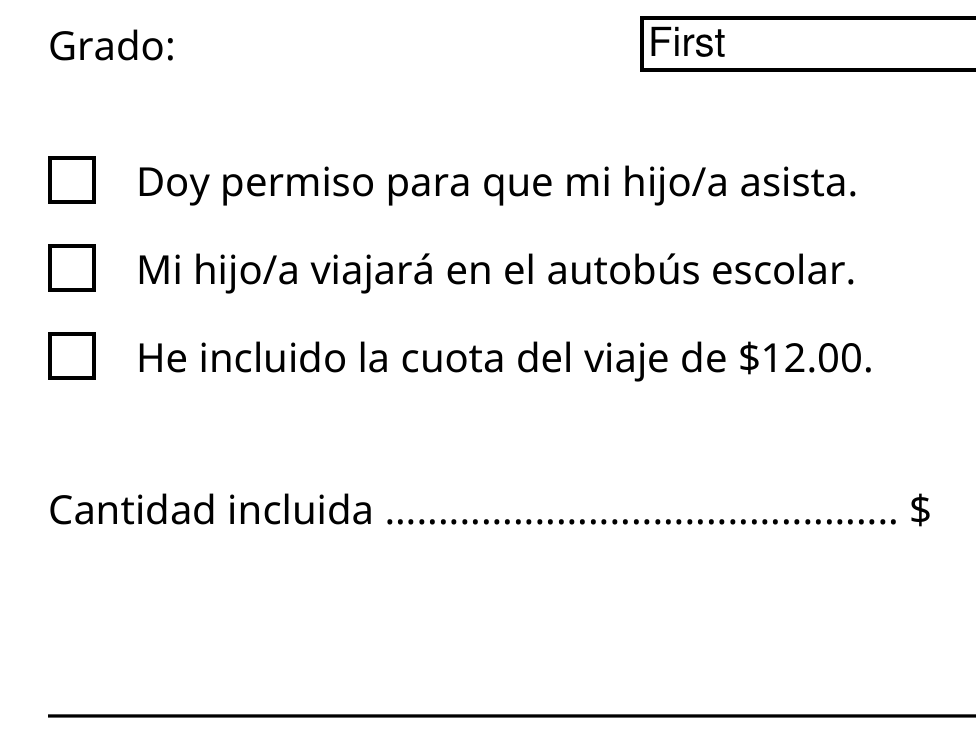
A public-domain form put through this engine. This sample was translated into Spanish; the rules on this page are the same for any language we draw.
Produced by this engine on September 13, 2026 from a public-domain form. No part of this image was edited by hand.
This is a working copy to help you understand the document — not a certified translation.
What changes when you translate into Portuguese
Every block, every color and every margin is kept — each block goes back in its own place, and nothing around it moves.
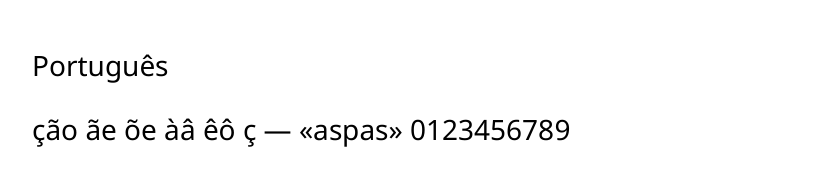
- Portuguese draws from the same bundled Latin faces, and its probe line is built around the nasal vowel markings — a tilde over the letter a and over the letter o — plus the cedilla under the letter c and the circumflex over the letters a and e. Every one of those precomposed letters measures a clean, fully covered set against the committed face, with nothing substituted. Unlike French, Portuguese never places a circumflex over the letters i or u, so the probe deliberately omits those two combinations rather than padding the set with codepoints the orthography does not use.
- A bolded or italicized Portuguese phrase keeps that emphasis: the selector reads the run's own bold and italic flags and resolves one of the four dedicated face files, so a legal citation set in italics never returns in the plain weight. A well-known Brazilian city name that carries a tilde over one of its vowels keeps that tilde in every one of the four styles.
- Portuguese is a spaced script, so wrapping only happens between words, never inside one — a hyphenated compound still wraps at the hyphen or the surrounding space, never in the middle of a syllable. The everyday word for umbrella, written as two words joined by a hyphen, can wrap at that hyphen but never anywhere else inside it.
- Not yet. Scanned pages have no text layer, so there's nothing on them to translate. Remove them before you get a price; the translated PDF contains the pages you kept. If every page looks scanned, there's nothing to translate and nothing to pay. OCR is on the roadmap.
- A codepoint the bundled Portuguese face cannot draw is replaced with a placeholder glyph, and the block that contains it is recorded as glyph_unsupported in the report, rather than the engine silently dropping the character or guessing a substitute.
Any language we translate into. The bundled fonts draw Latin, Cyrillic, Han (Simplified) and Japanese (kanji, hiragana and katakana). Scripts we do not yet carry a font for — Arabic, Hebrew and others — are replaced with a placeholder and the block is flagged in the report, never silently dropped.