Translate a PDF into Vietnamese — every field, table and checkbox still where it was.
- Script
- Latin
- Bundled font file
- NotoSans-Regular.ttf
- Language tag
- vi
A real document, before and after
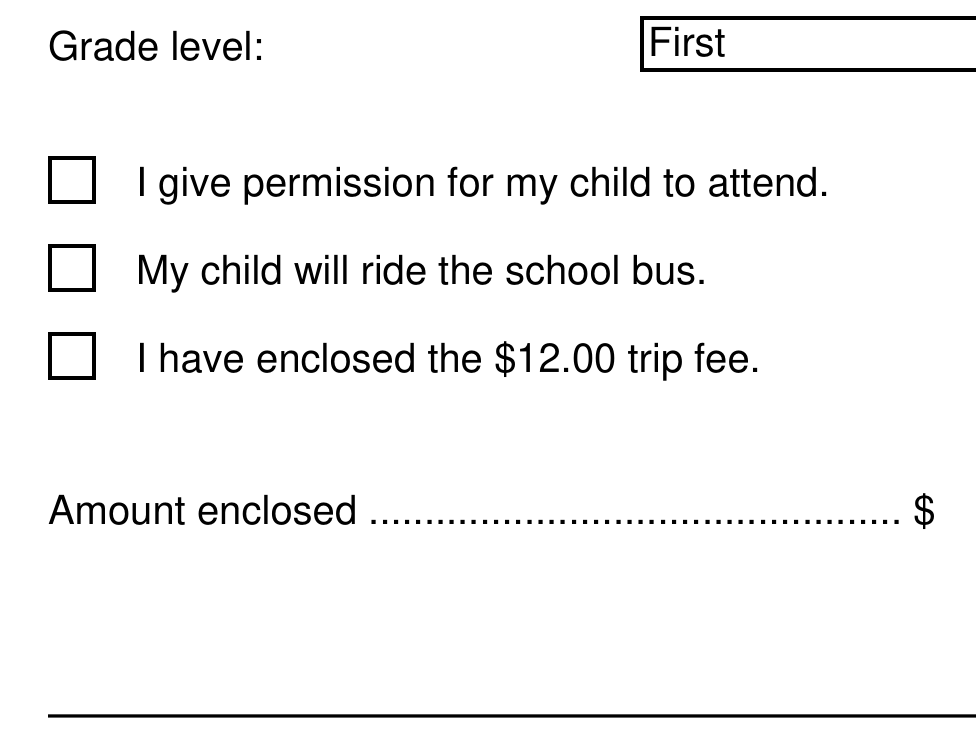
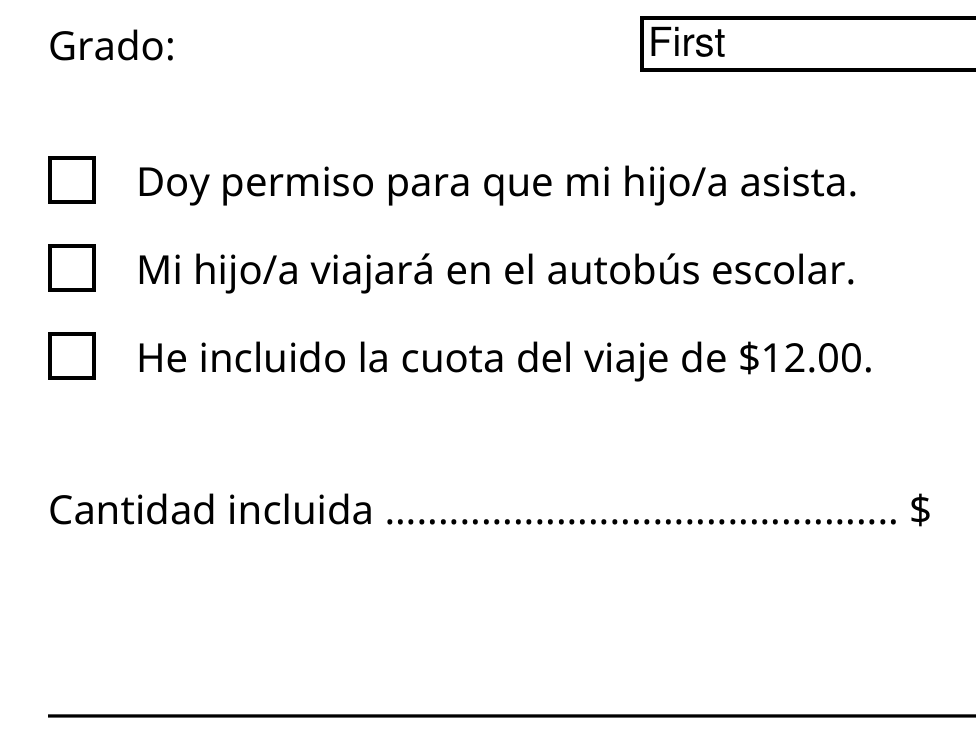
A public-domain form put through this engine. This sample was translated into Spanish; the rules on this page are the same for any language we draw.
Produced by this engine on September 13, 2026 from a public-domain form. No part of this image was edited by hand.
This is a working copy to help you understand the document — not a certified translation.
What changes when you translate into Vietnamese
Every block, every color and every margin is kept — each block goes back in its own place, and nothing around it moves.
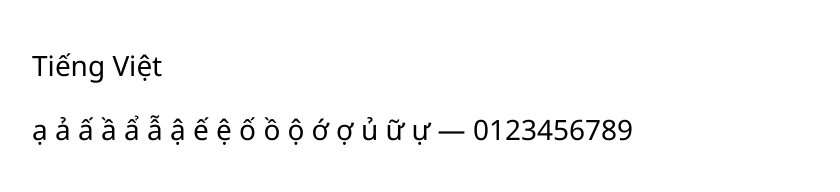
- Vietnamese draws from the bundled Latin faces, and its probe lists seventeen vowels that each carry two combined diacritics — a base-letter modifier such as a circumflex, a breve or a horn — together with one of six tone marks, arriving as a single precomposed codepoint apiece. Every one of those seventeen measures a clean, fully covered set against the committed face. Vietnamese names its six tones a level tone, a low falling tone, a high rising tone, a low dipping-then-rising tone, a creaky rising tone and a low glottal-stop tone; the probe's seventeen vowels are drawn from exactly this six-tone, several-base-letter system.
- Bold and italic Vietnamese text, double-diacritic vowels included, is preserved through the same four-file style selection as every Latin page — an emphasized two-word national place name keeps its circumflex and its falling tone mark in every one of the four styles.
- Because each double-diacritic Vietnamese vowel is one precomposed codepoint rather than a base letter plus two separately stacked marks, no shaping step is needed to keep the marks aligned — the wrap step treats each of those seventeen vowels, such as the horn-marked vowel in a well-known noodle-soup word, as a single, indivisible character, exactly like any other letter. The Vietnamese alphabet has been Latin-based only since the seventeenth century, when European missionaries romanized it in place of an older, Chinese-derived writing system; the engine's ordinary Latin wrap rule applies to the modern alphabet with no special-casing left over from that earlier system. Translated Vietnamese text typically runs longer than its English source: Vietnamese favours many short, one-syllable words carrying their own diacritic marks rather than a few long compound words, so a Vietnamese sentence usually needs more separate words, and more characters overall, than the English it came from.
- Not yet. Scanned pages have no text layer, so there's nothing on them to translate. Remove them before you get a price; the translated PDF contains the pages you kept. If every page looks scanned, there's nothing to translate and nothing to pay. OCR is on the roadmap.
- A Vietnamese character the bundled face cannot draw — including any double-diacritic vowel outside the covered seventeen — is replaced with a placeholder glyph, and the block containing it is recorded as glyph_unsupported in the report.
Any language we translate into. The bundled fonts draw Latin, Cyrillic, Han (Simplified) and Japanese (kanji, hiragana and katakana). Scripts we do not yet carry a font for — Arabic, Hebrew and others — are replaced with a placeholder and the block is flagged in the report, never silently dropped.