Translate a PDF into Chinese (Simplified) — every field, table and checkbox still where it was.
- Script
- Han (Simplified)
- Bundled font file
- NotoSansSC-Regular.ttf
- Language tag
- zh-Hans
A real document, before and after
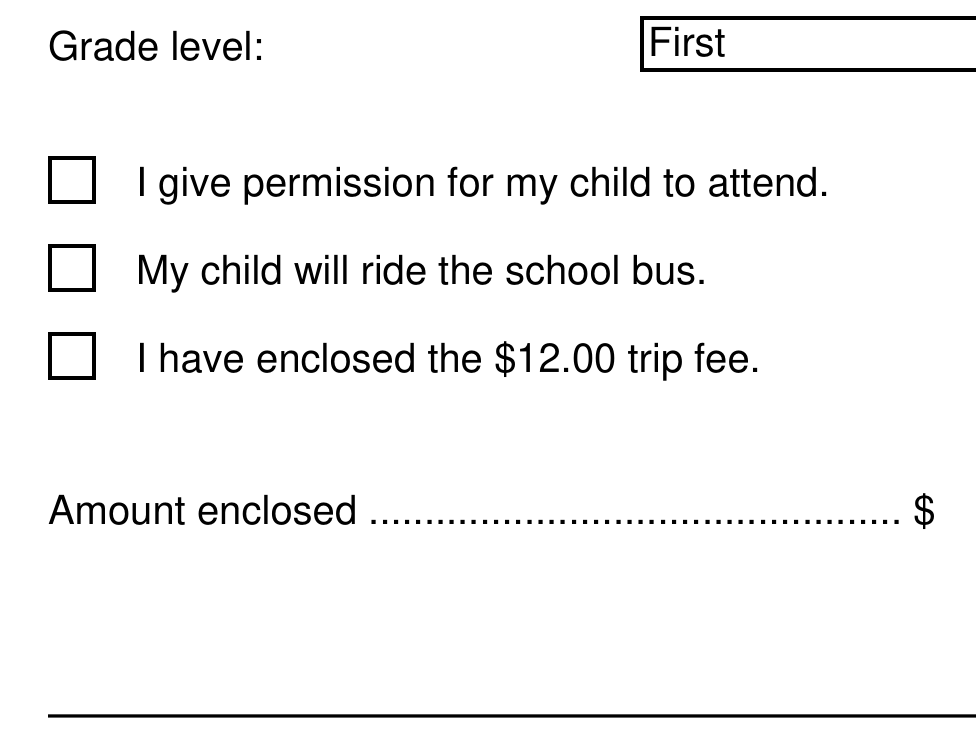
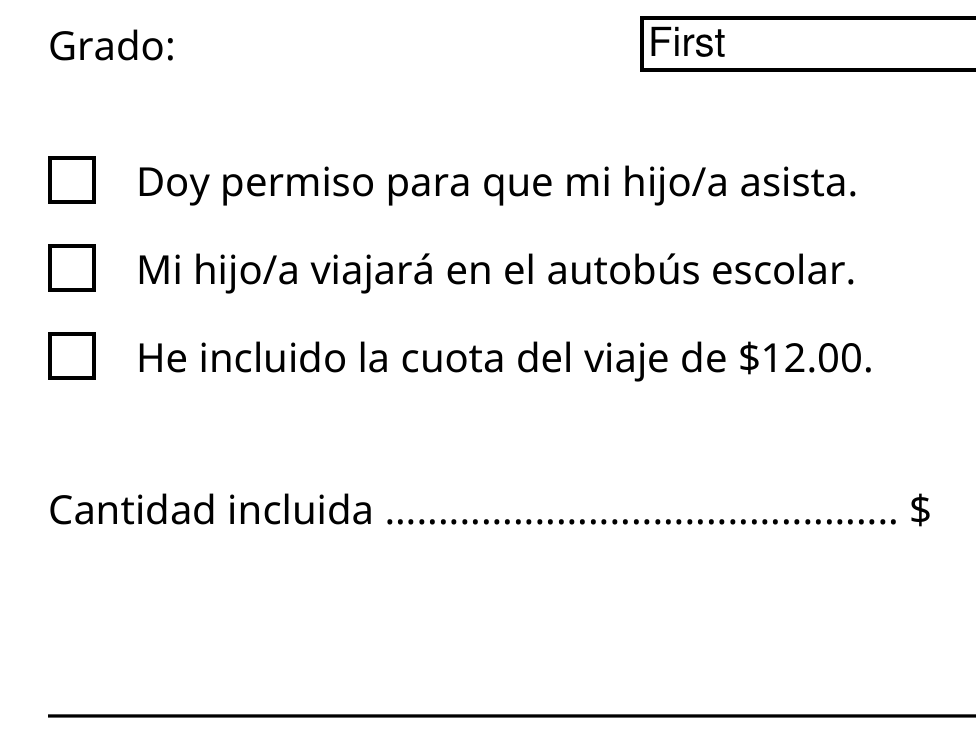
A public-domain form put through this engine. This sample was translated into Spanish; the rules on this page are the same for any language we draw.
Produced by this engine on September 13, 2026 from a public-domain form. No part of this image was edited by hand.
This is a working copy to help you understand the document — not a certified translation.
What changes when you translate into Chinese (Simplified)
Every block, every color and every margin is kept — each block goes back in its own place, and nothing around it moves.
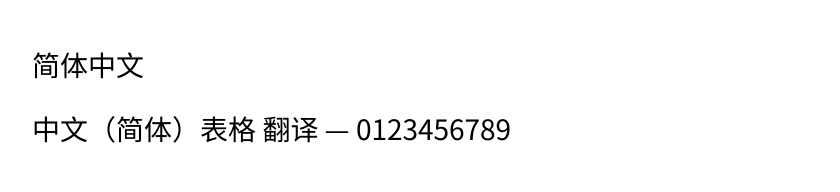
- Simplified Chinese draws from a single dedicated Han face bundled with the engine, distinct from every Latin and Cyrillic face used elsewhere in this family. Its probe covers full-width parentheses and punctuation alongside the Han characters themselves, and every one of those measures a clean, fully covered set against that one committed face. Simplified characters are logographic rather than alphabetic — a common character meaning country is its own visual unit built from strokes and a radical, not a sequence of letters standing for sounds — so the probe checks whole characters rather than an alphabet of parts.
- Unlike every other page in this family, Simplified Chinese has only one weight bundled: the same face file is resolved for the regular, bold, italic and bold-italic style combinations alike, so a source run marked bold or italic still draws from that one file — the report names any block where that fallback applied, rather than silently pretending a second weight exists. There is also no upper or lower case to preserve at all, since Han characters carry no case distinction the way Latin or Cyrillic letters do.
- Simplified Chinese carries no spaces between words, so a line can break between any two adjacent Han characters — subject to the kinsoku rule that keeps a small set of closing punctuation marks from ever starting a line and a matching set of opening marks from ever ending one, rather than the whitespace rule every other page in this family uses. Translated Simplified Chinese text typically runs shorter than its English source: a single Han character often carries what an English word needs several letters to spell out, so the same sentence usually renders in noticeably fewer characters. The same ladder still runs when a line does not fit: the engine wraps between adjacent characters instead of at a space, steps the type down but never past 75% of its original size, grows the block into any empty space below, then harmonises the type size across the units sharing a source style, so no block sits at an odd size beside its neighbours; a line that still will not fit stays at its original wording while the page is flagged.
- Not yet. Scanned pages have no text layer, so there's nothing on them to translate. Remove them before you get a price; the translated PDF contains the pages you kept. If every page looks scanned, there's nothing to translate and nothing to pay. OCR is on the roadmap.
- A Han character the bundled face cannot draw is replaced with a placeholder glyph, and the block containing it is recorded as glyph_unsupported in the report — the probe recorded for this page shows nothing does, across both the Han characters and the full-width punctuation it was checked against.
Any language we translate into. The bundled fonts draw Latin, Cyrillic, Han (Simplified) and Japanese (kanji, hiragana and katakana). Scripts we do not yet carry a font for — Arabic, Hebrew and others — are replaced with a placeholder and the block is flagged in the report, never silently dropped.